
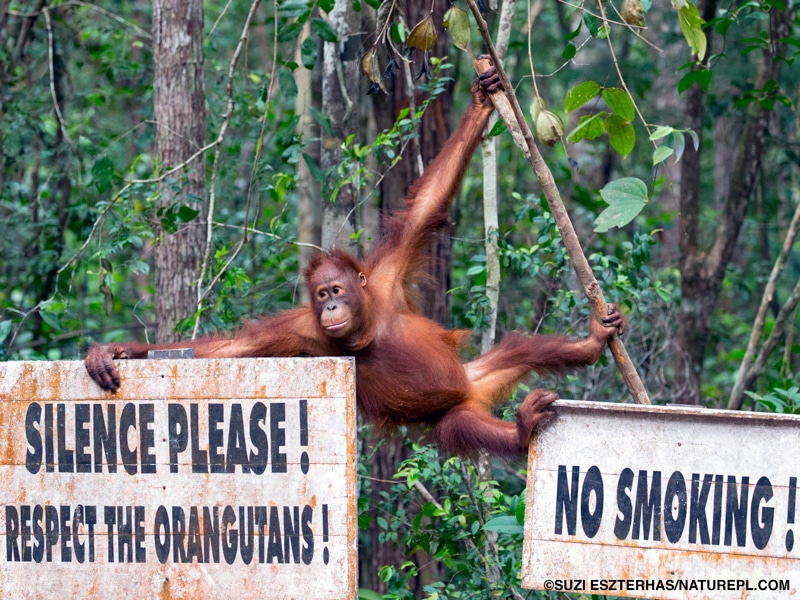



Apes have fascinated humans since antiquity: Several ancient myths and legends mention their existence. Over time, scientists, philosophers, and others have made comparisons between humans and apes in efforts to define precisely what characterizes “humans” and what is unique about “humanity.” Such investigations spurred research into ape behavior, communication, tool use, self-awareness, social structure, culture, and social learning. As behavioral and ecological research was made available to the public, people’s fascination with the apes grew, stimulating the desire to see them in captivity and in the wild. In 1925, the first national park in Africa was created to protect mountain gorillas.
Governments, tour operators, local communities, and conservation organizations increasingly view wildlife and ape tourism as a potential source of funding to support national and regional economies, sustain local development and employment, contribute to biodiversity conservation, and raise awareness about wildlife and nature. The ape tourism industry has grown considerably since the 1950s and is expected to expand even more in the future.
But tourism poses a significant risk to the apes. Behavioral disturbance, disease transmission, overhabituation and a higher risk of aggression, conflict, and stress are among the documented impacts of tourism. In addition, unregulated and poorly planned ape tourism activities can lead to human–ape conflicts in adjacent communities, particularly if apes lose their fear of humans and enter cultivated fields, where they may consume or damage crops and engage in aggressive interactions with people. Such conflicts can negatively impact ape behavior and culture, as well as their chances of survival in areas where communities retaliate.
Chapter 3 assesses the risks of disease transmission by humans who come in close contact with wild habituated and captive apes; identifies the costs and benefits of habituating apes and keeping them in captivity for research and tourism; and identifies current knowledge gaps and ways to address the sanitary risks linked to ape research and tourism activities.
Key findings include:
- In Africa and Asia, stakeholders increasingly perceive wild apes as opportunities for socioeconomic development, spurring growth in the number of habituated groups across their ranges.
- A growing body of evidence shows that habituated apes—including those in captive facilities—are at risk of disease spillover from humans. The inverse is also true, with apes posing a threat to humans.
- A dearth of information on the risks of disease transmission between humans and apes—especially from Asia—hampers the design of effective management strategies that could minimize the risks linked to habituation for research and tourism, including in entertainment facilities.
- Although best management practices are available for research and tourism, poor enforcement, a lack of awareness, insufficient resources, and inadequate capacity are hindering implementation.
- Disease surveillance, epidemiology, and health studies at the human–ape interface are critical priorities for the prevention of disease transmission between humans and apes and vice-versa.
- Reducing the risks of disease transmission between people and apes is a conservation priority. The ape–human interface could become more secure for these threatened species through collaboration among stakeholders, including academics, businesses, conservationists, government authorities, local communities, scientists, tour operators, tourism facilities, and tourists.