
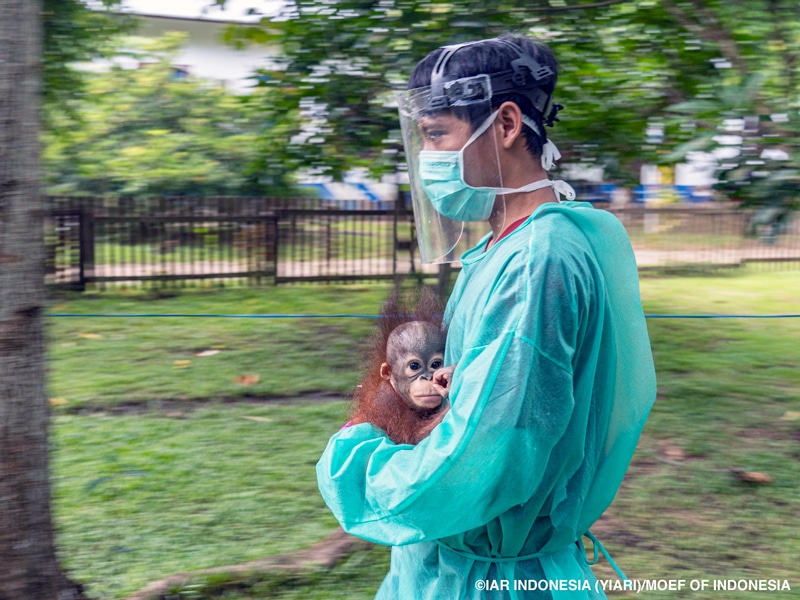



Apes are kept in various forms of captivity. They can be found in biomedical laboratories; breeder and dealer facilities; entertainment and exhibition contexts like circuses, multimedia companies, and tourism; private homes; and rescue and rehabilitation centers, sanctuaries, and zoos. The movement of apes between these different forms of captivity—for example, from a laboratory to a sanctuary—reflects increasing public concern for ape welfare and recognition of ape sentience.
This two-part chapter focuses on the status and welfare of apes in rescue and rehabilitation centers, sanctuaries, and zoos. The first section focuses on understanding, measuring, and improving the welfare of captive apes. The second section provides updated statistics on captive ape populations around the globe.
Key findings include:
- The welfare of captive apes often falls between the cracks of domestic animal health and wild animal conservation, indicating a need for efforts to identify gaps in resources and enforcement of relevant laws on a country-by-country basis.
- By applying for and attaining professional accreditation, captive facilities can strengthen systems and features that support good ape welfare.
- A lack of information sharing among facilities impedes greater understanding of captive ape population statistics, a problem compounded by language barriers, incompatible systems and skepticism about the merits of collaboration.
- How animal welfare is understood and discussed influences how it is assessed and how the resulting findings are used. Welfare-focused dialogue on neglected topics such as illegal trade and conservation translocation can support both ape welfare and conservation outcomes, particularly if it reflects current legal and scientific thinking—and public opinion—on animal sentience.
- A growing body of evidence indicates which welfare features are critical to captive great apes, although less attention has been paid to gibbons. Universal agreement on species-specific ape welfare indicators remains elusive, but ongoing initiatives highlight momentum and synergies.