

State Of The Apes

  • Home
  • Volumes
    Toggle submenu
    • Volume I - Extractive Industries
    • Volume II - Industrial Agriculture
    • Volume III – Infrastructure Development
    • Volume IV - Killing, Capture and Trade
    • Volume V – Disease, Health and Ape Conservation
  • Resources
    Toggle submenu
    • Reports
    • Videos
  • Languages
    Toggle submenu
    • Français
    • Bahasa Indonesia
    • 中文
  • Partners
Toggle Menu

Flyout Menu

  • Home
  • Volumes
    Toggle submenu
    • Volume I - Extractive Industries
    • Volume II - Industrial Agriculture
    • Volume III – Infrastructure Development
    • Volume IV - Killing, Capture and Trade
    • Volume V – Disease, Health and Ape Conservation
  • Resources
    Toggle submenu
    • Reports
    • Videos
  • Languages
    Toggle submenu
    • Français
    • Bahasa Indonesia
    • 中文
  • Partners

Home » Volume 5

Ch. 5: Ape Health and Ethics

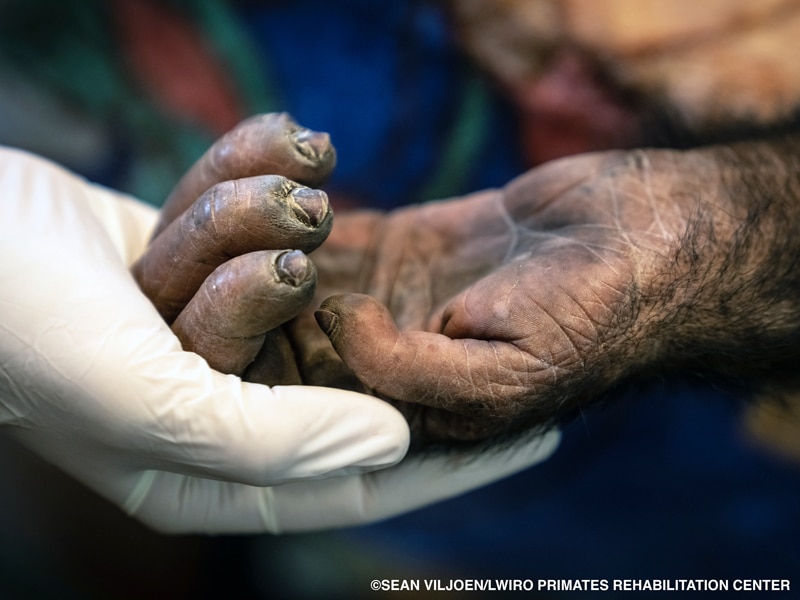
The hand of a chimpanzee resting on a gloved human hand.

Facebooktwitterby feather
Download Full Chapter

Ape care and protection give rise to many moral and ethical problems. While it’s impossible to enumerate the full range of dilemmas that can occur in the context of protecting and caring for apes, exploring these issues can provide insight into practical methods for ensuring the health and well-being of individuals, communities, and populations.

This chapter raises several of the most pressing ethical considerations relevant to ape health care and protection, including in regions of the world where medical services are often severely limited for human populations. Beginning with an overview of general ethical questions that arise in ape conservation, the chapter outlines the ethical foundations of ape moral standing and the role of compassionate conservation in addressing tensions between individual and population health outcomes. It then examines particular moral dilemmas with a view to proposing general considerations and approaches for resolving key moral dilemmas of ape care and protection. Finally, the chapter highlights ways in which caregivers and other decision-makers can remain morally courageous and resilient in the face of significant challenges.

Key findings include:

  • The provision of health care to apes presents ethical challenges that require balancing the complex and often conflicting values that define well-being.
  • Interventions are ethically sound when carried out by qualified personnel (such as field-trained veterinarians) and if anticipated benefits outweigh identified risks as they relate to individual, environmental, and social conditions.
  • To foster moral courage and resilience, organizations can take a variety of actions to provide support for caregivers and others, such as by developing peer networks, fostering positive coping strategies, and ensuring institutional responsiveness.
  • Download

To purchase State of the Apes

Purchase from Cambridge University Press

To purchase State of the Apes

Purchase from Amazon

To purchase State of the Apes

Purchase from Barnes and Noble

To purchase State of the Apes

Purchase from Amazon Purchase from Cambridge University Press Purchase from Barnes and Noble
Arcus Foundation
U.S. Office

Phone: +1-212-488-3000

U.K. Office

Phone: +44-1223-653040

Subscribe to Arcus Emails

More Information

contact@arcusfoundation.org

Arcus Foundation

Great Apes & Gibbons Program
  • Visit us on Facebook
  • Visit us on Instagram
  • Visit us on LinkedIn

Privacy | Terms