

State Of The Apes

  • Home
  • Volumes
    Toggle submenu
    • Volume I - Extractive Industries
    • Volume II - Industrial Agriculture
    • Volume III – Infrastructure Development
    • Volume IV - Killing, Capture and Trade
    • Volume V – Disease, Health and Ape Conservation
  • Resources
    Toggle submenu
    • Reports
    • Videos
  • Languages
    Toggle submenu
    • Français
    • Bahasa Indonesia
    • 中文
  • Partners
Toggle Menu

Flyout Menu

  • Home
  • Volumes
    Toggle submenu
    • Volume I - Extractive Industries
    • Volume II - Industrial Agriculture
    • Volume III – Infrastructure Development
    • Volume IV - Killing, Capture and Trade
    • Volume V – Disease, Health and Ape Conservation
  • Resources
    Toggle submenu
    • Reports
    • Videos
  • Languages
    Toggle submenu
    • Français
    • Bahasa Indonesia
    • 中文
  • Partners

Home » Volume 5

Ch. 4: Managing Ape Health: Informing Interventions

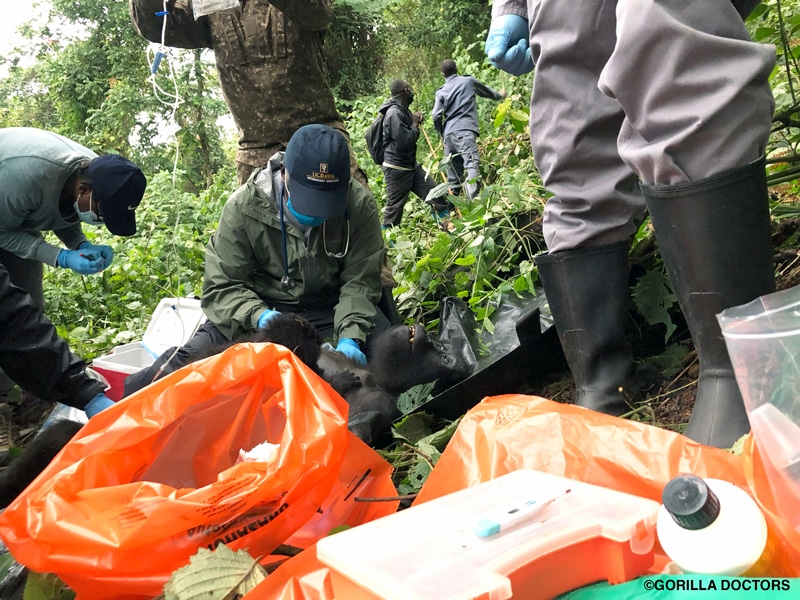
A group of veterinarians wearing face masks, long pants, jackets, and caps treat a sick adult mountain gorilla lying on its back with a baby on its chest in the forest.

Facebooktwitterby feather
Download Full Chapter

Veterinarians, like professionals in human health, have long been taught: “first, do no harm.” The desire to do good can sometimes get in the way of an appropriate decision. This chapter focuses on the need for a decision-making process for intervention in each situation—and on the importance of using available information and knowledge to inform and guide that process.

It begins with a historical recap of the evolution of ape health-focused interventions. It continues by examining reasons to intervene, skills required for effective interventions, the ethical implications of vaccination, and the factors that inform interventions at the systems level, such as capacity building, technological advances, and the availability of relevant toolboxes and approaches. Through a variety of case studies—on topics as diverse as intervening in unregulated settings and improving diagnostics—the chapter delves into real-world scenarios that are rarely covered in ape health management resources.

Key findings include:

  • Decisions to intervene are necessarily context-specific and potentially differ based on whether targeted apes live inside or outside their natural habitat and whether they are captive, habituated, or wild.
  • Concerns regarding the health of both the individual and the population require consideration in intervention decisions.
  • Best practice in the consideration of potential interventions involves a risk-based approach designed to inform the decision-making process based on assessments of the consequences of both intervening and not intervening.
  • Ape health intervention teams that possess requisite qualifications—such as diagnostic, veterinary, and communication skills—are more likely to secure and maintain positive health outcomes, especially if they arrange for independent auditing of their welfare and health management processes.
  • Download

To purchase State of the Apes

Purchase from Cambridge University Press

To purchase State of the Apes

Purchase from Amazon

To purchase State of the Apes

Purchase from Barnes and Noble

To purchase State of the Apes

Purchase from Amazon Purchase from Cambridge University Press Purchase from Barnes and Noble
Arcus Foundation
U.S. Office

Phone: +1-212-488-3000

U.K. Office

Phone: +44-1223-653040

Subscribe to Arcus Emails

More Information

contact@arcusfoundation.org

Arcus Foundation

Great Apes & Gibbons Program
  • Visit us on Facebook
  • Visit us on Instagram
  • Visit us on LinkedIn

Privacy | Terms