

State Of The Apes

  • Home
  • Volumes
    Toggle submenu
    • Volume I - Extractive Industries
    • Volume II - Industrial Agriculture
    • Volume III – Infrastructure Development
    • Volume IV - Killing, Capture and Trade
    • Volume V – Disease, Health and Ape Conservation
  • Resources
    Toggle submenu
    • Reports
    • Videos
  • Languages
    Toggle submenu
    • Français
    • Bahasa Indonesia
    • 中文
  • Partners
Toggle Menu

Flyout Menu

  • Home
  • Volumes
    Toggle submenu
    • Volume I - Extractive Industries
    • Volume II - Industrial Agriculture
    • Volume III – Infrastructure Development
    • Volume IV - Killing, Capture and Trade
    • Volume V – Disease, Health and Ape Conservation
  • Resources
    Toggle submenu
    • Reports
    • Videos
  • Languages
    Toggle submenu
    • Français
    • Bahasa Indonesia
    • 中文
  • Partners

Home » Volume 4

Ch 2: Understanding and Responding to Cultural Drivers of the Ape Trade

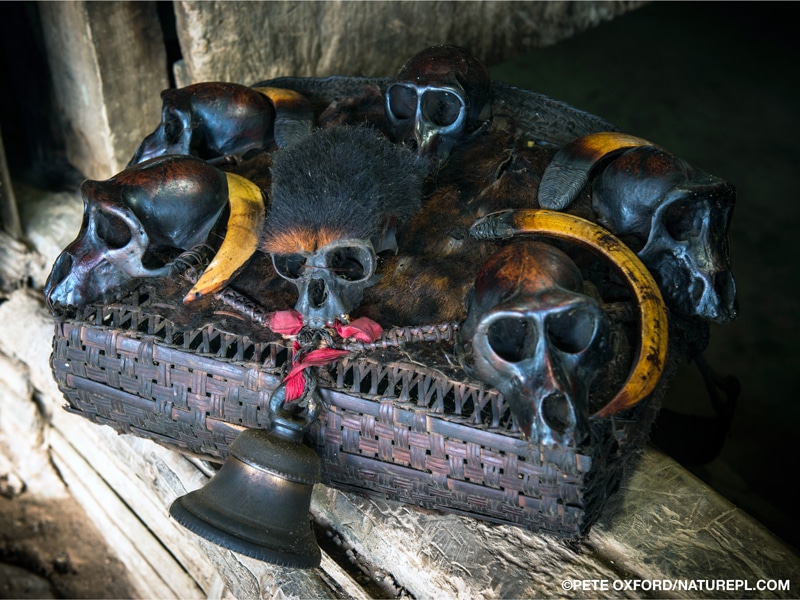
A Konyak Naga head trophy basket adorned with a bell, fur, boar tusks, and six skulls of western hoolock gibbon and capped langur

Facebooktwitterby feather
Download Full Chapter

This chapter explores the ways in which conservationists can understand and respond to the various cultural beliefs and practices that can lead to the killing and capture of apes. It considers the ape trade within local and community contexts and explores challenges to assessing the impact of the trade, especially given the dearth of research on apes’ use in traditional medicine and variations in local attitudes to apes and to nature.

The chapter presents four case studies showing that conservation planning is more likely to be effective when it factors in the cultural practices of communities that interact with apes and their habitats. Two studies focus on communities in Africa. One examines the demand for ape parts in Cameroon. The other looks at shifts in cultural practices in Uganda that increasingly threaten formerly protected apes. The other two case studies focus on Indonesian Borneo, presenting the cultural drivers of hunting in Kalimantan and how anthropological methods can contribute to understanding and addressing the killing of orangutans at the village level.

  • Download

To purchase State of the Apes

Purchase from Cambridge University Press

To purchase State of the Apes

Purchase from Amazon

To purchase State of the Apes

Purchase from Barnes and Noble

To purchase State of the Apes

Purchase from Amazon Purchase from Cambridge University Press Purchase from Barnes and Noble
Arcus Foundation
U.S. Office

Phone: +1-212-488-3000

U.K. Office

Phone: +44-1223-653040

Subscribe to Arcus Emails

More Information

contact@arcusfoundation.org

Arcus Foundation

Great Apes & Gibbons Program
  • Visit us on Facebook
  • Visit us on Instagram
  • Visit us on LinkedIn

Privacy | Terms