

State Of The Apes

  • Home
  • Volumes
    Toggle submenu
    • Volume I - Extractive Industries
    • Volume II - Industrial Agriculture
    • Volume III – Infrastructure Development
    • Volume IV - Killing, Capture and Trade
    • Volume V – Disease, Health and Ape Conservation
  • Resources
    Toggle submenu
    • Reports
    • Videos
  • Languages
    Toggle submenu
    • Français
    • Bahasa Indonesia
    • 中文
  • Partners
Toggle Menu

Flyout Menu

  • Home
  • Volumes
    Toggle submenu
    • Volume I - Extractive Industries
    • Volume II - Industrial Agriculture
    • Volume III – Infrastructure Development
    • Volume IV - Killing, Capture and Trade
    • Volume V – Disease, Health and Ape Conservation
  • Resources
    Toggle submenu
    • Reports
    • Videos
  • Languages
    Toggle submenu
    • Français
    • Bahasa Indonesia
    • 中文
  • Partners

Home » Volume 5

Introduction to Sect. 1: Disease, Health and Ape Conservation

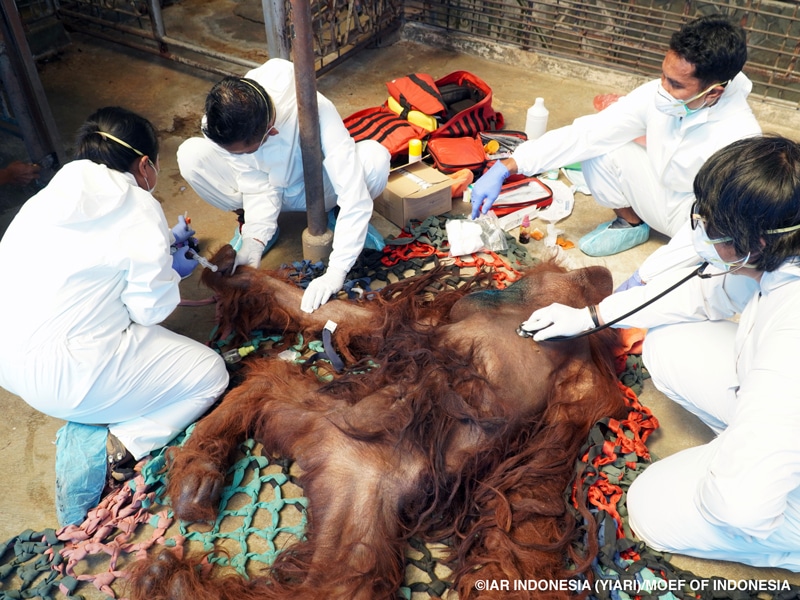
Four people wearing white medical scrubs, face masks and gloves crouch down over an orangutan lying on its back and take blood samples and listen to its heart with a stethoscope.
Facebooktwitterby feather

Download Full Introduction

Like humans, many apes are social beings who live in groups and interact closely with each other. The health of any group is closely tied to the health of individuals within that group, as well as to the size of the group. The settings in which apes live—be they natural forested habitat, sanctuaries or rehabilitation centers in their range countries, or zoos and sanctuaries elsewhere in the world—also come with unique sets of health-related risks and challenges.

Viewed through a conservation lens, disease represents a major threat to the survival of apes and other species that are threatened with extinction. Indeed, infectious disease is often listed among the principal threats to ape conservation, along with habitat loss and hunting, which can also expose apes to health threats.

The Introduction to Section 1 provides an overview of the major threat that disease and health issues represent to the survival of apes and other species, both in their natural habitats and in captivity. It acknowledges that the recent COVID-19 pandemic has lent a sense of urgency to much of this research and debate.

  • Download

To purchase State of the Apes

Purchase from Cambridge University Press

To purchase State of the Apes

Purchase from Amazon

To purchase State of the Apes

Purchase from Barnes and Noble

To purchase State of the Apes

Purchase from Amazon Purchase from Cambridge University Press Purchase from Barnes and Noble
Arcus Foundation
U.S. Office

Phone: +1-212-488-3000

U.K. Office

Phone: +44-1223-653040

Subscribe to Arcus Emails

More Information

contact@arcusfoundation.org

Arcus Foundation

Great Apes & Gibbons Program
  • Visit us on Facebook
  • Visit us on Instagram
  • Visit us on LinkedIn

Privacy | Terms