

State Of The Apes

  • Home
  • Volumes
    Toggle submenu
    • Volume I - Extractive Industries
    • Volume II - Industrial Agriculture
    • Volume III – Infrastructure Development
    • Volume IV - Killing, Capture and Trade
    • Volume V – Disease, Health and Ape Conservation
  • Resources
    Toggle submenu
    • Reports
    • Videos
  • Languages
    Toggle submenu
    • Français
    • Bahasa Indonesia
    • 中文
  • Partners
Toggle Menu

Flyout Menu

  • Home
  • Volumes
    Toggle submenu
    • Volume I - Extractive Industries
    • Volume II - Industrial Agriculture
    • Volume III – Infrastructure Development
    • Volume IV - Killing, Capture and Trade
    • Volume V – Disease, Health and Ape Conservation
  • Resources
    Toggle submenu
    • Reports
    • Videos
  • Languages
    Toggle submenu
    • Français
    • Bahasa Indonesia
    • 中文
  • Partners

Home » Volume 5

Ch. 1: Review of Ape Disease and Health

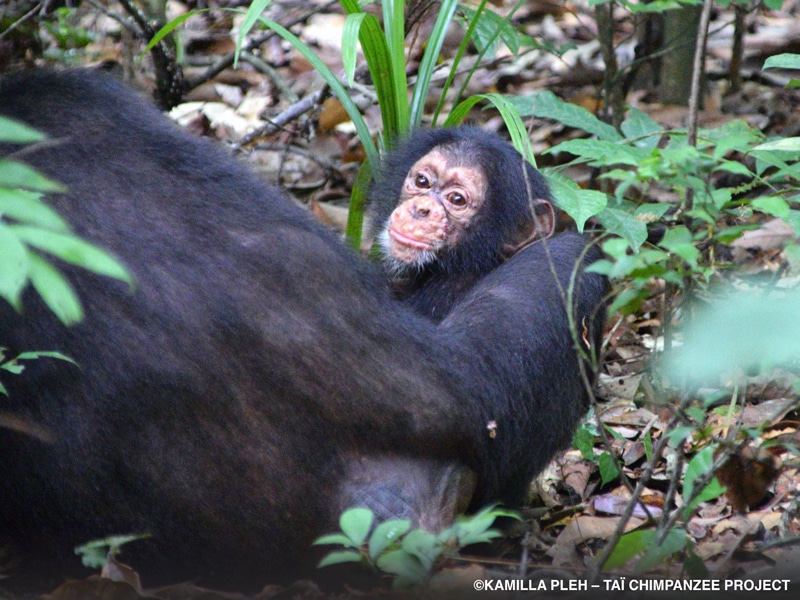
A baby chimpanzee with bumps on its face sits on leaves with an adult chimp's arm around it.

Facebooktwitterby feather
Download Full Chapter

Ape health is understudied when compared to human health, but it is by no means less complex. Different wild ape species live in a variety of social systems, ranging from semi-solitary orangutans and pair-bonded gibbons to the more gregarious African great apes (bonobos, chimpanzees, and gorillas). The formation of social groups can provide a number of health benefits, but can also create costs, especially by heightening the risk of exposure to communicable disease.

Moreover, as humans’ closest living relatives, apes share many of the same genetic, anatomical, and physiological features. Apes and humans are susceptible to similar diseases, which allows for disease transmission between both species.

This chapter focuses on health-related issues with available data and a known or likely impact on the conservation or welfare of wild and captive apes.

Key findings include:

  • Health-related risks, challenges, and management options vary across wild and captive apes.
  • The transmission of respiratory pathogens from humans to apes in both wild and captive settings is common, and can cause high morbidity and mortality.
  • Infectious diseases are a major conservation threat for wild apes, especially in gregarious species.
  • Noninfectious diseases play an important role in the health of captive apes.
  • Further research is required to fill knowledge gaps, including with respect to specific diseases, such as myocardial fibrosis, and regarding the relationship between sociality and health.
  • Download

To purchase State of the Apes

Purchase from Cambridge University Press

To purchase State of the Apes

Purchase from Amazon

To purchase State of the Apes

Purchase from Barnes and Noble

To purchase State of the Apes

Purchase from Amazon Purchase from Cambridge University Press Purchase from Barnes and Noble
Arcus Foundation
U.S. Office

Phone: +1-212-488-3000

U.K. Office

Phone: +44-1223-653040

Subscribe to Arcus Emails

More Information

contact@arcusfoundation.org

Arcus Foundation

Great Apes & Gibbons Program
  • Visit us on Facebook
  • Visit us on Instagram
  • Visit us on LinkedIn

Privacy | Terms