

State Of The Apes

  • Home
  • Volumes
    Toggle submenu
    • Volume I - Extractive Industries
    • Volume II - Industrial Agriculture
    • Volume III – Infrastructure Development
    • Volume IV - Killing, Capture and Trade
    • Volume V – Disease, Health and Ape Conservation
  • Resources
    Toggle submenu
    • Reports
    • Videos
  • Languages
    Toggle submenu
    • Français
    • Bahasa Indonesia
    • 中文
  • Partners
Toggle Menu

Flyout Menu

  • Home
  • Volumes
    Toggle submenu
    • Volume I - Extractive Industries
    • Volume II - Industrial Agriculture
    • Volume III – Infrastructure Development
    • Volume IV - Killing, Capture and Trade
    • Volume V – Disease, Health and Ape Conservation
  • Resources
    Toggle submenu
    • Reports
    • Videos
  • Languages
    Toggle submenu
    • Français
    • Bahasa Indonesia
    • 中文
  • Partners

Home » Volume 4

Policy Briefing

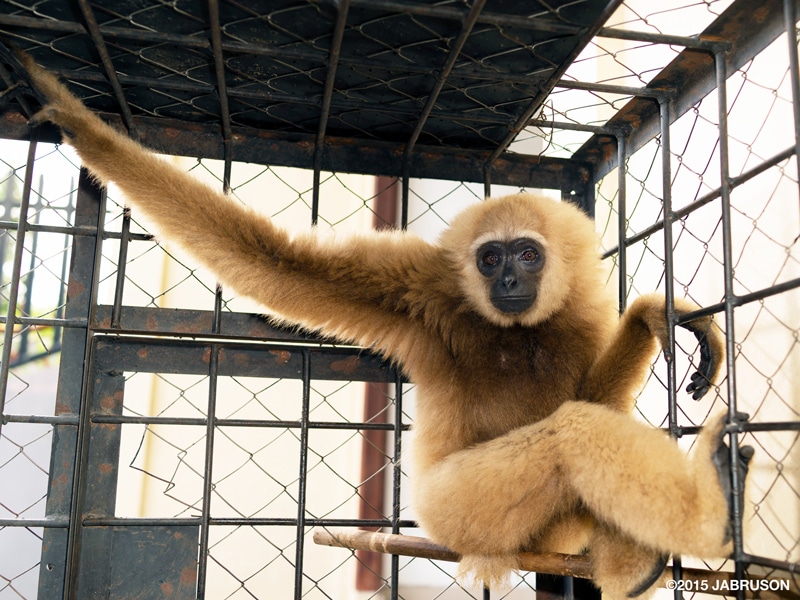
A Sumatran lar gibbon with beige fur resting on a pole and stretching out an arm in a cage
Facebooktwitterby feather

Download Full Briefing

This briefing summarizes key findings from State of the Apes: Killing, Capture, Trade and Conservation and presents policy recommendations to achieve a balance between socio-economic development, ape conservation and sustaining the livelihoods of communities local to ape habitats. Stakeholders are called upon to undertake interventions at every point along the trade chain.

Recommendations include developing effective domestic legal frameworks, imposing sanctions that deter criminal activity, supporting international policy frameworks and ensuring that regulations safeguard captive ape welfare. Targeted law enforcement needs to be strengthened at every step in the trade chain, particularly in transport and consumer markets. It is also essential to regulate private-sector actors, like industrial developers, and to close online markets facilitating wildlife trafficking.

Engaging communities and ensuring that they benefit from ape conservation is imperative. This engagement requires both an understanding of cultural contexts and the provision of economic incentives to safeguard animal welfare. Policymakers also need to focus on reducing demand for illegal products in domestic and international markets through awareness-raising, education and behavior change strategies.

  • Download

To purchase State of the Apes

Purchase from Cambridge University Press

To purchase State of the Apes

Purchase from Amazon

To purchase State of the Apes

Purchase from Barnes and Noble

To purchase State of the Apes

Purchase from Amazon Purchase from Cambridge University Press Purchase from Barnes and Noble
Arcus Foundation
U.S. Office

Phone: +1-212-488-3000

U.K. Office

Phone: +44-1223-653040

Subscribe to Arcus Emails

More Information

contact@arcusfoundation.org

Arcus Foundation

Great Apes & Gibbons Program
  • Visit us on Facebook
  • Visit us on Instagram
  • Visit us on LinkedIn

Privacy | Terms