

State Of The Apes

  • Home
  • Volumes
    Toggle submenu
    • Volume I - Extractive Industries
    • Volume II - Industrial Agriculture
    • Volume III – Infrastructure Development
    • Volume IV - Killing, Capture and Trade
    • Volume V – Disease, Health and Ape Conservation
  • Resources
    Toggle submenu
    • Reports
    • Videos
  • Languages
    Toggle submenu
    • Français
    • Bahasa Indonesia
    • 中文
  • Partners
Toggle Menu

Flyout Menu

  • Home
  • Volumes
    Toggle submenu
    • Volume I - Extractive Industries
    • Volume II - Industrial Agriculture
    • Volume III – Infrastructure Development
    • Volume IV - Killing, Capture and Trade
    • Volume V – Disease, Health and Ape Conservation
  • Resources
    Toggle submenu
    • Reports
    • Videos
  • Languages
    Toggle submenu
    • Français
    • Bahasa Indonesia
    • 中文
  • Partners

Home » Volume 4

Ch 5: Curbing the Illegal Killing, Capture and Trade in Apes: Responses at Source

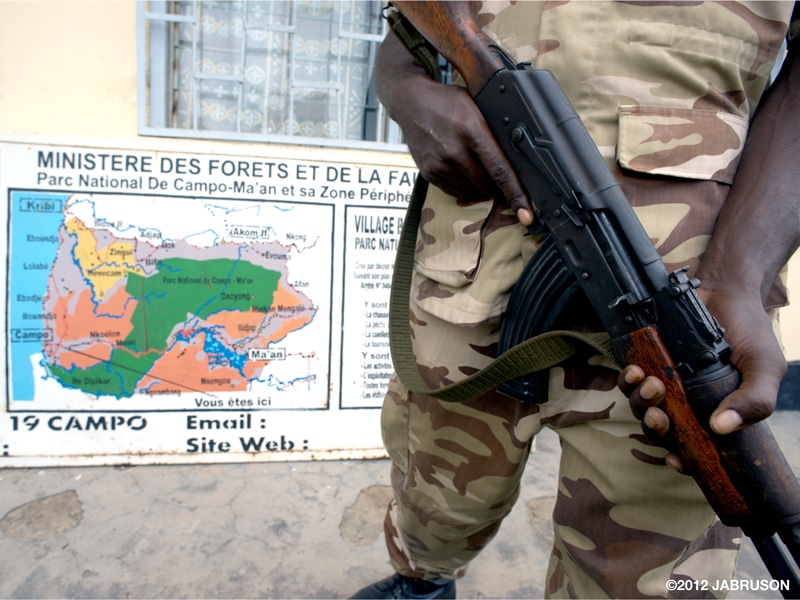
A person in a Campo Ma’an National Park, Cameroon, ranger uniform holds a long gun with a map in the background and French writing

Facebooktwitterby feather
Download Full Chapter

Trafficking in apes and other endangered animals has encouraged numerous policy and strategic discussions among source and demand countries, donors, and conservation organizations, as can be seen in the declarations of recent international conferences on the illegal wildlife trade.

These deliberations have generated consensus on four key strategies for tackling the trade: reducing demand for illegal products, developing effective legal frameworks, strengthening law enforcement, and promoting community engagement. The latter three are particularly relevant to enhancing ape protection and limiting illegal hunting and trade at the start of the supply chain in ape range states.

When it comes to the illegal trade in apes, local people are typically active at the start of a supply chain, which can involve complex trade networks of hunters, dealers and traffickers. But their involvement is often opportunistic rather than organized, typically driven by factors such as poverty, cultural or economic incentives, resentment of perceived conservation injustices, or social, historical or political conditions. Approaches that recognize and respond to these context-specific driving forces are critical to reducing the trade at source.

  • Download

To purchase State of the Apes

Purchase from Cambridge University Press

To purchase State of the Apes

Purchase from Amazon

To purchase State of the Apes

Purchase from Barnes and Noble

To purchase State of the Apes

Purchase from Amazon Purchase from Cambridge University Press Purchase from Barnes and Noble
Arcus Foundation
U.S. Office

Phone: +1-212-488-3000

U.K. Office

Phone: +44-1223-653040

Subscribe to Arcus Emails

More Information

contact@arcusfoundation.org

Arcus Foundation

Great Apes & Gibbons Program
  • Visit us on Facebook
  • Visit us on Instagram
  • Visit us on LinkedIn

Privacy | Terms