

State Of The Apes

  • Home
  • Volumes
    Toggle submenu
    • Volume I - Extractive Industries
    • Volume II - Industrial Agriculture
    • Volume III – Infrastructure Development
    • Volume IV - Killing, Capture and Trade
    • Volume V – Disease, Health and Ape Conservation
  • Resources
    Toggle submenu
    • Reports
    • Videos
  • Languages
    Toggle submenu
    • Français
    • Bahasa Indonesia
    • 中文
  • Partners
Toggle Menu

Flyout Menu

  • Home
  • Volumes
    Toggle submenu
    • Volume I - Extractive Industries
    • Volume II - Industrial Agriculture
    • Volume III – Infrastructure Development
    • Volume IV - Killing, Capture and Trade
    • Volume V – Disease, Health and Ape Conservation
  • Resources
    Toggle submenu
    • Reports
    • Videos
  • Languages
    Toggle submenu
    • Français
    • Bahasa Indonesia
    • 中文
  • Partners

Home » Volume 4

Ch 3: Socioeconomics and the Trade in Ape Meat and Parts

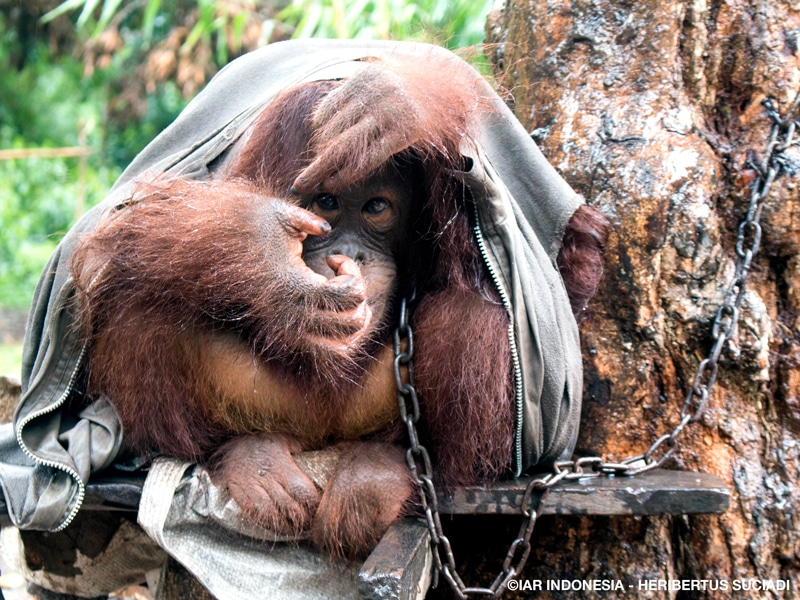
An orangutan chained to a tree sits hunched over on a piece of metal with a zippered sweatshirt draped over its body

Facebooktwitterby feather
Download Full Chapter

People hunt wild animals in a wide range of settings all over the world. Zooarcheological evidence shows that hunting goes back at least two million years and even contributed to the extinction of megafauna in the Pleistocene period.

Yet today, there is mounting evidence that apes are becoming a more desired product, and thus trafficking is increasing. The secretive, illegal nature of the trade in their meat and parts makes it difficult to accurately assess the rate at which apes are taken from the wild.

What is understood is that motivations for subsistence and commercial hunting vary. Rural communities tend to rely on wild meat as a source of protein and income. Wealthier urban dwellers consume wild meat as a luxury item and symbol of their status, even when cheaper protein sources are available. Weak governance and corruption enable ape hunting to proceed unchallenged.

The chapter considers four main barriers that thwart the transition from destructive to sustainable use of wild meat. Those include the tendency of individuals to act in their own self-interest rather than that of the community’s common good—especially when communities have no legal rights and governance is weak. Second, great apes and other large-bodied species are more vulnerable than smaller animals because of their large return to the hunter. Third, with the human population and its wealth growing exponentially, wildlife production cannot expand to meet the growing demand. And fourth, wildlife habitat is being rapidly lost through agricultural and industrial development.

Tackling the trade in ape meat and parts requires a combination of strategies: reducing consumer demand by providing and promoting alternative protein sources, raising awareness of the ecological consequences of unsustainable harvesting, enhancing legal frameworks and law enforcement, and providing economic incentives to stop hunting and consumption of wild meat.

  • Download

To purchase State of the Apes

Purchase from Cambridge University Press

To purchase State of the Apes

Purchase from Amazon

To purchase State of the Apes

Purchase from Barnes and Noble

To purchase State of the Apes

Purchase from Amazon Purchase from Cambridge University Press Purchase from Barnes and Noble
Arcus Foundation
U.S. Office

Phone: +1-212-488-3000

U.K. Office

Phone: +44-1223-653040

Subscribe to Arcus Emails

More Information

contact@arcusfoundation.org

Arcus Foundation

Great Apes & Gibbons Program
  • Visit us on Facebook
  • Visit us on Instagram
  • Visit us on LinkedIn

Privacy | Terms